
This page contains affiliate links. Please read our disclosure for more info.
Kamakura is our new favourite city in Japan.
Surfer vibes combine with history in this ancient capital. You’ll find dozens of temples and shrines, a long sandy beach, and a backdrop of green hills.
Cool cafes (with excellent coffee), traditional restaurants, and independent shops are hidden down charming narrow lanes.
It feels green and walkable and so much more chilled than Tokyo or Kyoto—on weekdays anyway.
Kamakura is an extremely popular day trip destination from Tokyo and key spots are packed on weekends (good luck squeezing on the retro Enoden train).
Kamakura deserves more than a day trip, though. There’s so much to do and a longer stay makes it easier to avoid the crowds.
Simon and I had five nights in the city and still didn’t do everything we planned. We even skipped popular places like Enoshima Island, Tsurugaoka Hachimangu Shrine, and Komachi shopping street.
Instead, we explored at a more laidback pace. We visited some famous temples, but we also sought out quieter shrines, hiked in the forest, swam in the sea, drank coffee in the cutest cafes, and sought out the best vegan food.
In this Kamakura Japan travel guide, I share our picks for the best things to do in Kamakura, where to eat and drink coffee, and how to get there.
Whether you have just one day or I’ve convinced you to stay longer, I hope you get some ideas to enjoy the city in a more leisurely way.
At the end, you’ll find a Kamakura map with all our recommendations.
Contents
Where is Kamakura, Japan?
Kamakura is located on the coast in Kanagawa Prefecture, about an hour south of Tokyo and 30 minutes south of Yokohama.
It’s easy to get there by inexpensive local train—I include details below.
The nearest shinkansen stop is Shin-Yokohama.
If you are coming from Kyoto or Osaka, the easiest route is to change at Shinagawa. Allow around 3 hours.

Top Tip: Make sure to carry cash in Kamakura. You’ll need it for temple entrance fees (and goshuin stamps) and some small businesses.
Things to Do in Kamakura
1) Seek Out Seasonal Flora

With many temples and gardens, Kamakura is a top spot to seek out seasonal flora.
In early April, the cherry blossoms bloom, and in late November the maple trees turn red.
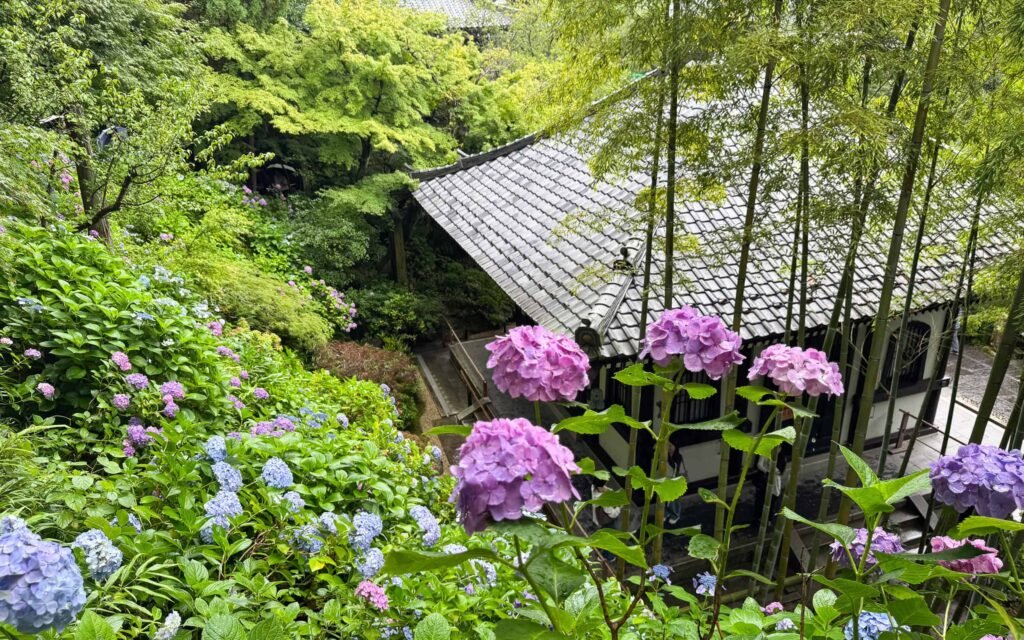
Less well known to foreigners is hydrangea season (ajisai in Japanese), which is a big deal in Kamakura.
We were in Kamakura in mid-June, peak season for these wonderfully puffy flowers (although you should be able to see them throughout June).

The colourful blooms are a beautiful sight, but the popular spots get extremely busy even on weekdays (definitely avoid weekends!).
The most famous places to see hydrangeas are Hase-dera and Meigetsu-in (see below).
It’s also worth seeking out quieter temples where the displays may be less extravagant, but you can enjoy them in peace.
2) Admire the View at Hase-Dera Temple

The Hase area is a short hop west on the classic Enoden train from central Kamakura, and it’s a must-visit.
As well as two of Kamakura’s most important temples, it’s a lovely neighbourhood to explore with narrow lanes, charming coffee shops, and some tasty places to eat (our picks are below).
Hase-dera is one of Kamakura’s most famous and oldest Buddhist temples, dating back to the 8th century. It’s known for its large wooden statue of Kannon, the goddess of Mercy.
The grounds are lovely to wander with a main hall, caves, ponds, and gardens.

You can also enjoy a view of town and Yuigahama Beach from the top of the hill.

The gardens are beautiful throughout the year, but they are most popular in June when the hillside is covered with many varieties of hydrangeas in pink, purple, blue, and white.
It’s a stunning sight, but expect crowds—you’ll be walking up and down stairs in a line of other people.

How to Visit Hase-Dera During Hydrangea Season
You must book in advance to follow the Hydrangea Path in peak season (in 2026, this was from 6-26 June).
On our visit, tickets were released at 10am on Tuesday for the following week. There was a queue to access the website and some slots sold out in minutes.
We chose the first 8am slot, which I recommend to minimise the crowds (and arrive 10 minutes early).

The Hydrangea Path costs 500 yen in addition to the 400 yen general entrance fee, which you pay on the day (cash, cards, and IC accepted).
We also bought a special hydrangea goshuin (1000 yen cash only) for our temple stamp book. These are provided on separate paper rather than handwritten at busy times.
Check the Hase-dera website in May for details of booking the Hydrangea Path (dates aren’t released until near the time).
3) See the Great Buddha Daibutsu at Kotoku-in

The Daibutsu or Great Buddha is also located in Hase at Kotoku-in Temple. It’s Kamakura’s most iconic attraction.
This 11.4 metre high bronze Buddha statue was completed in 1252 and is an imposing but serene sight with Kamakura’s hills behind it.

This is another spot that’s worth visiting early to avoid the crowds—at 9.30am it wasn’t too bad.
It’s a fairly quick stop as there’s not much else to see in the complex.
The temple is open from 8am-5.30pm and entry is 300 yen (cash only). We bought a handwritten goshuin for 500 yen.
4) Visit Meigetsu-in, the Temple of Flowers

Meigetsu-in is located in the Kita-Kamakura area in the northern part of the city, just a 3-minute train ride on the JR line from Kamakura Station.
I wish we’d had more time to explore the area as it’s very green and tranquil with lots of temples.
We focused on Meigetsu-in as it’s known as the hydrangea temple. The leaflet we were given showed the flowers that bloom throughout the year, so I’m sure it’s worth visiting outside June (and probably much quieter).
We arrived 20 minutes before 8.30am opening (on a weekday), and there was already a long queue waiting for the gates to open. They let us in 15 minutes early, so it is worth arriving early. When we left an hour later, it was even busier.
At this temple, almost all the hydrangeas are the same variety of Hime Ajisai (Princess Hydrangea) that bloom a vivid blue.

They are truly beautiful, but the crowds made the experience overwhelming.
There were long queues for photos of the most famous spots (including the round window in the main hall), but we skipped those.

Entrance is 500 yen (cash only). There’s no need to book.
We also paid an extra 500 yen for access to the Iris Garden, which is only open for a few weeks in June. In mid-June the irises were past their peak, but at least it was a more tranquil area.
5) Hike the Daibutsu Trail

If you want to escape the crowds in Kamakura, I recommend hiking on the trails that lead through forest around town.
The most popular route is the Daibutsu Hiking Trail, which connects Kita-Kamakura to the Great Buddha in Hase via several temples and shrines.
Although we passed a few groups, it was mostly a peaceful experience.
It’s fairly well signposted, but we still found our AllTrails map useful.
The 3.7km (2.3-mile) trail took us about 1.5 hours at a slow pace (2.5 hours with stops). It was 159 metres elevation gain with only a few steep sections.
We didn’t find it difficult, but good shoes are a must as the trail can be muddy and slippery.
We started from the Kita-Kamakura end with a visit to Meigetsu-in and breakfast at Verve Coffee Roasters.
The trail starts very close to Verve with the entrance up stairs to Jōchi-ji.

This is the fourth out of Kamakura’s Five Great Rinzai Temples and was founded in 1283.
We enjoyed the tranquil forest location with the sound of birdsong as we wandered the paths past several temple buildings, a small bamboo grove, and some hydrangeas.
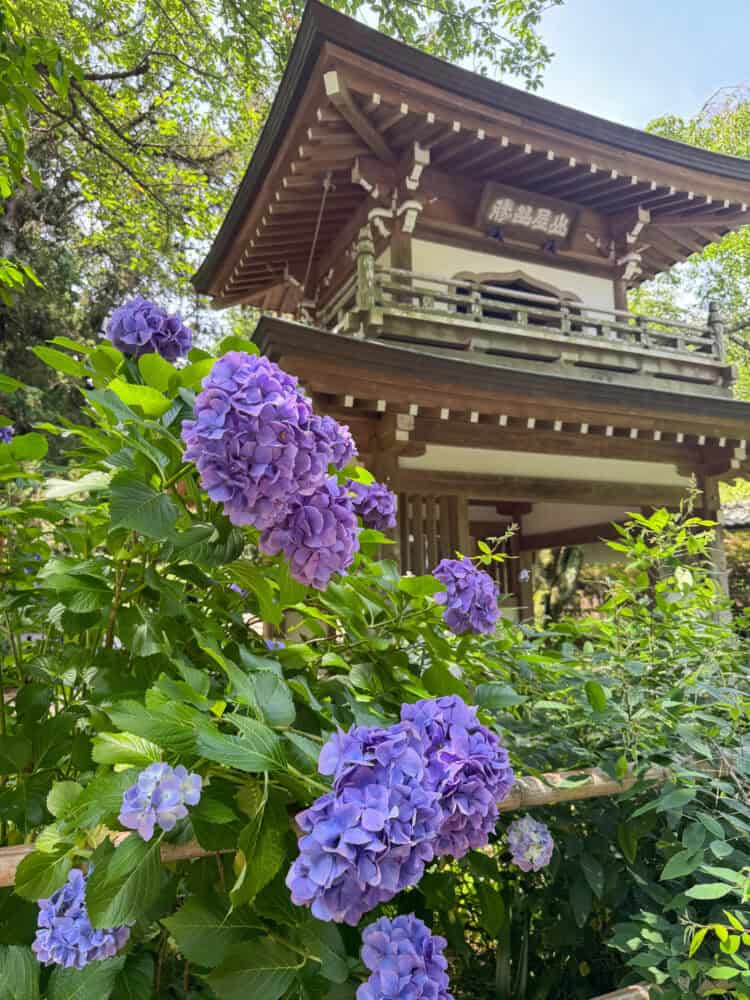
Entrance is 300 yen (cash only). We paid 500 yen for a handwritten goshuin.
After Jōchi-ji, we walked down an easy paved path before starting up the hill into the forest.
Our next stop was Kuzuharaoka Jinja, a shrine known for bringing romantic luck.

Entrance is free. We did pay 1000 yen for a special double goshuin printed page celebrating hydrangea season.
You can find hydrangeas in the picnic area outside the shrine and throughout. It was an easier place to enjoy them in peace.
Just past the shrine, there are toilets on the right up stairs.
There’s also a good view nearby.

We’d planned to detour to two more shrines—Zenirai-Benten (popular for money washing) and Sasuke Inari Shrine (for its torii gates), but we had a lunch reservation to get to, so we skipped them.
I thought we’d pass Sasuke Inari as it looks like it’s on the trail, but a sign showed us the detour we’d need to take. I believe the trail was damaged after a typhoon and there are no plans to repair it (let us know if that changes).
We enjoyed more forest walking, and then a narrow, steep section down to Hase.
Cheeers Coffee was the perfect place to cool off at the end of the trail. We then had a delicious vegan lunch at Kitotoki (reservations required).
You could visit Daibutsu and Hase-dera after the trail, but we did those on another morning. The Hase crowds felt intense in the afternoon, so we’re glad we didn’t have to deal with them after the hike.
6) Relax on the Beach

The benefit of a longer stay in Kamakura is having time to relax on the beach and swim. It’s a great change of pace from temple-hopping.
Yuigahama Beach is the most popular and accessible beach. You can walk there in 5 minutes from Hase Station.
This long stretch of grey sand isn’t the most attractive beach, but it’s a pleasant place for a barefoot stroll or to relax or swim.
The beach is popular with surfers, but the waves were gentle on our visit, so I enjoyed a few swims. The sea temperature was 25ºC in June—very pleasant. I’ve noticed that locals don’t tend to swim outside the official season, though.
The beach season in Kamakura only runs from July to August, so you won’t find lifeguards or changing huts outside those months. They were building all the infrastructure in June.
At one end of the beach is the Kamakura Seaside Park Sakanoshita Area, which has a grassy area and a tap if you need to wash off your feet. There’s also a Lawson nearby for drinks and snacks.
7) Wander the Neighbourhoods

If you have time to explore Kamakura at a laidback pace, one of the joys is just wandering the neighbourhoods.
It’s a very walkable city with lots of charming narrow lanes and picturesque houses. We loved the Hase and Gokurakuji neighbourhoods in particular, and there are lots more areas we’d like to wander next time.
Of course, please be respectful on these narrow residential streets by keeping quiet and not taking intrusive photos.

A pleasant walk is from Hase over to Gokurakuji, down to the Kamakura Seaside Park (where you can see Mt Fuji if you are luckier than us) and then back along the coastal road to Yuigahama Beach.
We did this in the evening when the day trippers had left, and it was very peaceful.
Coffee Shops in Kamakura
Simon is a speciality coffee fan (he loves a good geisha or ombligon pourover) and was delighted to discover that Kamakura has many excellent coffee shops.
Spending time in these cafes was a highlight of our laidback Kamakura trip.
All of these except Verve are in Hase.
The Pass

The Pass coffee shop is one of our favourite places in Kamakura.
It’s down the same cute side street as Cotonoha vegan restaurant and has a traditional Japanese feel overlooking a little garden.

There’s a good selection of beans for pourovers, plus espresso drinks and a few non-coffee drinks (I liked the Japanese black tea).
The food menu is limited, but it’s all amazing—chia pudding (with granola, yoghurt and berry compote), magic scone, banana bread, and a buckwheat crepe breakfast wrap (Simon got it without bacon to be vegetarian but not vegan).

The vibe is relaxing even when it’s busy on weekends, the staff is friendly, and they open at 7.30am, so it’s perfect for breakfast before a day of temple-hopping.
Check The Pass Instagram for their closing days, though.
We went to The Pass almost every day; it’s that good!
Idobata

If you just want a quick, takeaway coffee, head to Idobata, a stand near Hase Station.
It has a surprisingly good range of high-quality beans (even geisha) available only as pourover, either hot or cold.
It’s cash only.
Cheeers Coffee

Cheeers Coffee is hidden down a backstreet near Daibutsu. The calming space was a welcome retreat after we finished hiking the Daibutsu Hiking Trail.
They roast their own beans, and you can choose from several types for drip coffee or espresso. Their roasts are a little darker if you’re looking for something more robust.
They have a good selection of non-coffee drinks too—I enjoyed an iced lemongrass tea.
It’s a friendly spot that’s a good option for everyone, whether you are seriously into coffee or not.
Paso by 27 Coffee Roasters

Paso by 27 is in a beautiful wooden house down a side street. The hydrangeas in their small garden added to the charm.
This is a serious speciality coffee shop—they only do hand drip, and you can choose from a selection of beans (some pricey). You can order it hot or cold.
The only other drink option is lemonade. They have a few desserts, but these were sold out on the afternoon we visited.
While the coffee was good at Paso, it can be extremely busy on weekends. We also found it less friendly than the other cafes (understandable given the crowds).
Verve Coffee Roasters
Verve is a chain, and the coffee isn’t quite as good as at the other cafes we visited. But it’s still a fantastic option, especially if you are looking for a wider range of drinks and food.
We visited the branch by Kita-Kamakura station before hiking the Daibutsu trail.
There’s also a branch in central Kamakura.
The grilled cheese sandwich was excellent. Simon liked the Sermon blend used in my espresso so much that he bought a bag of the beans to use with his Aeropress (they worked well).
The waffles and cakes looked good too, and they have a range of teas.
Our Favourite Places to Eat in Kamakura
We ate so well as vegetarians in Kamakura, and the food is one of the reasons we’d like to return.
All these restaurants are in the Hase area (there are options elsewhere—use the Happy Cow app).
Everywhere except the bakery is vegan-friendly.
Most are open for lunch only, and aren’t open every day, so always check Google Maps and their Instagram for the latest opening hours.
My vegetarian Japan guide has more tips, and I also have recommendations for the best vegan and vegetarian restaurants in Tokyo.
Cotonoha

Vegan restaurant Cotonoha is an atmospheric place to eat in a traditional wooden house down a cute side street. It’s my top pick if you only have time for one restaurant.
In June, they were only serving a set lunch for 3900 yen, but there are usually a few options such as curry and buddha bowls.
We were happy with our delicious, filling platter of healthy veggies, tofu, and rice—they use Kamakura vegetables where possible.

Our set also included a small dessert and a hydrangea-inspired butterfly pea tea, which turns from blue to purple when you add lemon.
Kitotoki

Kitotoki is another vegan hidden gem down a backstreet near the Daibustu. They offer set lunches using organic vegetables from their farm.
You have to book a table at this tiny place at least 2 days in advance (I emailed through the Kitotoki website—you’ll need to translate it).
Everything is cooked up by one woman who served us a feast of 15 small dishes including the typical rice, miso soup, and pickles, plus an array of vegetables and delicious fried tofu.

They also offer cooking classes.
Monyeo

On Hase’s main street, we were surprised that this organic Korean restaurant had several vegan options marked on the menu.
We both chose the soft tofu stew set, and it was absolutely delicious but very spicy!
Monyeo is listed on Google Maps as 鎌倉韓国料理 モニョ.
Luna Burger

If you fancy a break from Japanese, Luna Burger is the place to go. They have a huge range of all vegan burgers with interesting toppings such as Massaman Curry, BBQ, or Salsa.
Burgers come with crisps, but we also got a side of fries and excellent onion rings.
We liked it so much, we ate there twice.
Boulangerie Ensemble
Boulangerie Ensemble is a French-style bakery with excellent croissants, pastries, and baguettes.
It’s conveniently open from 7am (rare in Japan), so it’s perfect for an early start. We went there a lot!
For breakfast, we also loved The Pass coffee shop (see above).
Where We Stayed in Kamakura

We stayed at Ocean Side Shell, a stylish one-bedroom apartment in Hase.
We loved the apartment, and the location was perfect—in a quiet neighbourhood a few minutes’ walk from the beach and 15 minutes from two major attractions—Hase-dera and the Great Buddha.
It’s a 30-minute walk from central Kamakura, but we didn’t need to go there as we found so many good restaurants and coffee shops in Hase.
You can also take the Enoden train from Hase Station (an 8-minute walk away) to Kamakura Station.
The apartment has a surfy vibe with some nice design features. It’s spacious for two people, with a large open-plan kitchen/living room/dining room.

There’s also a terrace with seating and a little bit of a sea view.
The bedroom was small, and the bed was not super comfortable (typical in Japan), but it was ok. It has a huge TV.
The large bathroom included a jacuzzi bath and a very powerful shower.
Our biggest complaint was that the wardrobe in the bedroom was locked, and there were no drawers to store our clothes or even a luggage rack.
There are a few hangers in the entrance cupboard, and we managed to find corners of the room to unpack.
It had all the facilities we needed—a/c, washing machine, and decent kitchen equipment (although as usual in Japan—no perishable items like tea, oil or salt).
Overall, we really enjoyed our five nights and would stay there again. We’ve rented a lot of apartments in Japan and this is one of the best.
Check availability for Ocean Side Shell here.
Or search for other hotels in Kamakura on Booking (the platform we always use).
How to Get to Kamakura
The best way to get to Kamakura is by train from Tokyo (or Yokohama if you are visiting there).
From Tokyo Station, we took the JR Yokosuka line direct to Kamakura, which took 55 minutes.
It’s a local train, so you can tap in with your Suica or other IC card.
On a Saturday, the train was busy, and not very enjoyable with luggage, but we got a seat fairly quickly.
We later realised that these trains have a Green (first class) Car, which is quieter and more comfortable. I recommend paying the supplement for this, especially if you have luggage.
After tapping onto the platform, you need to pay the Green Car supplement at a machine on the platform. Unfortunately, you need a physical Suica card for this, so it didn’t work with our Apple Wallet Suica.
You can also pay the extra fee on the Welcome Suica app or directly to an attendant on the train (although this will cost more).
When we left Kamakura, we took the train to Tokyo Haneda Airport with a change in Yokohama for the Keikyū Main Line Express. This takes about an hour plus transfer time.
Getting Around Kamakura

The historic Enoden electric train is the classic way to get around Kamakura and an attraction in its own right.
Unfortunately, it gets incredibly crowded on weekends, so I recommend avoiding it then and walking as much as possible.
When we arrived at Kamakura Station on a Saturday afternoon, there were massive queues just to get onto the Enoden train platform, and cars were packed like sardines.
As we had suitcases, we skipped the train and waited in the taxi queue outside instead. No taxis came, and no Ubers would accept us.
We ended up having to walk the 30 minutes to our Hase apartment instead.
On weekdays, the situation was much more manageable, and we rode the train a few times without problems (including when we left).
There are also buses within Kamakura, but we didn’t take any. Google Maps will tell you if they make sense for your destination.
But walking is really the best way to get around Kamakura.
Map of Kamakura, Japan
This Kamakura map has everywhere I mentioned in this post.
Is Kamakura Worth Visiting?
Kamakura is definitely worth visiting!
It’s a unique combination of stunning temples, forest, and beach with some excellent cafes and restaurants.
We loved spending the morning temple hopping and the afternoon swimming in the sea.
While it can be busy, it’s not as overcrowded as Kyoto, and you can find quieter spots—just avoid weekends.
We’ll be back to Kamakura for sure!
More Japan Tips
We’ve spent many months travelling in Japan over the years. Here are more posts to help you plan your trip:
Our Tokyo Travel Guides
Other Japan Posts
Enjoyed this post? Pin it for later!

