

This page contains affiliate links. Please read our disclosure for more info.
Our Hokkaido summer trip was so different from our previous Japan visits to the main island of Honshu.
Hokkaido, in the far north of Japan, is a land of wide open spaces, forests, volcanoes, and lakes.
In winter, it becomes a frozen world of white, but during its brief summer, trees burst into life, lushly green, and wildflowers spring up along every road.
We wanted a nature-filled trip, so we skipped the capital Sapporo and focused our self-drive road trip on central and eastern Hokkaido, including two national parks—Daisetsuzan National Park and Akan Mashu National Park.
It’s a huge island, and while driving is easy, it definitely makes sense to focus on one or two areas.
On our Hokkaido road trip, we strolled through lavender fields, hiked up volcanoes, swam in pristine lakes, warmed up in wild hot springs, canoed down rivers, and ate all the delicious soft-serve ice cream.
We had 10 days in Hokkaido, but we travelled at a fairly relaxed pace, so I’ve included suggestions below to adapt our road trip if you only have a week.
In this Hokkaido summer itinerary, I share our route (including famous sights and off-the-beaten-track gems), where we stayed, and tips for visiting in summer.
Contents
Our 10 Day Hokkaido Itinerary at a Glance
We had 11 nights and 10 full days in Hokkaido.
If you would rather travel at a faster pace, you could reduce Lake Kussharo by 2 nights and add in a stop at Shiretoko National Park, an unspoilt peninsula where you can see bears. I wish we could have visited, but I don’t regret not rushing around.
We mostly chose self-catering accommodation because we are vegetarian and food options are limited for us in rural Hokkaido.
We flew in and out of Asahikawa Airport (AKJ).
Hokkaido’s biggest airport is New Chitose (CTS) outside Sapporo. This itinerary would work from there, but you’ll have an extra 2.5-hour drive at each end.

An Alternative 7 Day Hokkaido Itinerary
We travelled at a relatively relaxed pace with plenty of time at Lake Kussharo in Akan Mashu National Park in particular. We usually only did half a day of activities.
If you only have a week in Hokkaido, I recommend this shorter version of our itinerary.
- Sounkyo Onsen – 2 nights
- Lake Kussharo – 3 nights
- Biei – 2 nights
Hokkaido in Summer: What to Expect

Hokkaido is significantly cooler in summer than more southern cities like Tokyo and Kyoto. It’s what initially attracted us on our June visit—to escape the hot, rainy season on Honshu.
At the end of June, we had mild temperatures, usually around 20ºC (68ºF). Our coldest day was 16ºC (61ºF) when it rained in cooler Eastern Hokkaido, and the warmest was 25ºC (77ºF) in Biei.
Up in the mountains, it’s even colder, and Daisetsuzan National Park has a brief summer season (just July and August). In June, it was 12ºC (54ºF), and there was still snow on the ground at the top of Asahidake Ropeway (it snowed in early June!).
Sadly, we didn’t entirely escape the rain. It rained on about half of our 10 days, but mostly not all day—a late afternoon shower was more likely.
It was cloudy most of the time, but we had two glorious sunny days.
If you travel in July or August, it may be warmer in Hokkaido. It’s also likely to be busier due to school holidays from late July to late August. We found it generally quiet except for a few popular tour stops.
Driving in Hokkaido
We rented a small automatic car via Booking Car Rentals with Orix at Asahikawa Airport. We had an Aqua hybrid (with CarPlay—yay!).
As always in Japan, we found the process very straightforward. Just be sure to have an international driving licence—this is essential!
We found the driving easy with empty roads that are often long and straight (although we drove some winding mountain roads too). They drive on the left in Japan, the same as in the UK.
We used Google Maps to navigate. Save an offline map in advance, in case you lose signal.
Our only complaint is the slow speed limits—60km/h on ordinary roads (slower if marked) and 100km/h on expressways (supposedly—the one we went on was 70km/h). Most drivers do not stick to these.
Expressways have toll charges, which can be quite pricey, but there was only one on our route on our last day, and we could have avoided it. It cost 2500 yen.
We picked up a ticket when we entered the expressway. At the end, we inserted it into the machine at the gate and paid cash (credit cards were also accepted).
When driving around Hokkaido, look out for the excellent Michi-no-Eki (roadside stations) for toilets, snacks, and local souvenirs.
It’s hard to find anywhere to dispose of rubbish, so keep a bag in your car for it.
You’ll also need to keep some cash for parking (which usually cost 500 yen at tourist sights).
Map of Our Hokkaido Road Trip
This map shows all the places we visited on our Hokkaido summer road trip.
And here’s our rough route (without day trips):

Our Hokkaido Itinerary in Detail
Day 1: Arrive in Higashikawa (3 Nights)
Drive from Asahikawa Airport to Higashikawa: 20 minutes / 13km (8 miles).
Our flight from Tokyo Haneda (with the excellent Japan Airlines) arrived at 3.45pm at Asahikawa Airport, a tiny regional airport.
We had our luggage and car rental within 25 minutes of landing.
As soon as we walked out of the airport, Hokkaido felt different. First, it was the smell that hit us—like freshly cut grass—and as we drove off, it was the empty roads and the wide-open, vibrant green landscape.
After checking into our Airbnb, we went to the nearby town of Higashikawa for dinner and to stock up on breakfast supplies at the Higashikawa Hokuren Supermarket.
There aren’t many restaurants open in the evening in this sleepy town, and even fewer with vegetarian options, so we lucked out at Bistro Ponsuke.
It’s a Mexican restaurant that feels Japanese with a few seats at the counter and one chef making one thing well.
We had a platter of 5 vegetarian tacos, and it was all amazing. Just don’t expect service to be fast.
Where We Stayed: Sonnet Airbnb House

As we are vegetarian, we wanted the option to self-cater, so we chose an Airbnb in the countryside a 7-minute drive outside Higashikawa.
Sonnet is a one-bedroom, open-plan house with panoramic windows overlooking a flower garden, rice fields, and mountains beyond. We slept to a chorus of frogs and even saw a deer.
We loved the peaceful location, and it had all the basic facilities we needed, including a small kitchen, air conditioning, and a washing machine.

An alternative, if you’d rather stay in a hotel, is Adagio Hokkaido in Biei, where we stayed on our last night before our flight out (see below). It’s closer to the flower fields and has gorgeous views.
Day 2: Biei and Furano Area
Today we drove around the Biei and Furano areas, past rolling green hills, farmland, rice paddies, and flower fields, with the snow-topped peaks of Daisetsuzan National Park on the horizon.
The flowers are the big draw in this area—especially the lavender, which peaks in mid-July. We were a little early on 19 June, but there was still enough to enjoy.
This was the busiest area of our Hokkaido road trip, but it’s popular for a reason.
Make sure you do not walk in the flower fields—keep to the paths.
Our first stop was 40 minutes away, and our furthest stop was 1 hour 10 minutes from our Airbnb.
Panoramic Flower Gardens Shikisai-no-oka

With patterned rows of colourful flowers on a hillside, we knew Shikisai-no-oka was a popular spot, so we arrived just after 8.40am opening to try to avoid the crowds.
One tour bus was just arriving, but it wasn’t too busy, and there was plenty of space for everyone.
If you have mobility issues, you can take a tractor up the hill, but we enjoyed the easy walk.

Although the fields weren’t in full bloom, some sections were still colourful, including the purple catmint, perennial blue salvia, and poppies.


It’s a lovely place to wander with wide-open scenery and the mountains in the distance.
There’s a cafe and gift shop (I preferred the lavender souvenirs at the next stop, though). Simon enjoyed a potato croquette.
Entrance to Shikisai-no-oka is free from October to June and 800 yen from July to September. Parking is 500 yen (cash only, pay at the gate on the way out).
We loved it here so much that we returned on our final morning before our flight. I had a final lavender soft serve, which was nice, but Farm Tomita’s is better.
Farm Tomita

Farm Tomita is the most famous flower garden in the area, especially for lavender. And by 10.15am it was already very busy (I counted 10 tour buses!).
It was still a worthwhile stop, despite the crowds and the fact that it doesn’t feel as expansive as Shikisai-no-oka.
The lavender had started to bloom (the field on the hill at the back was much quieter), and there were other flowers too.
My favourite thing was the lavender soft-serve ice cream in a waffle cone—delicious!
Soft serve (known locally as soft cream) is a big deal in Hokkaido, where more than half of Japan’s raw milk is produced, and this was an excellent start. See my soft serve rankings later in this post.

There are lots of cafes and shops in the complex. We bought some dried lavender sachets and a whole Furano melon (you can also buy a slice), which is famous for its sweetness. At 3100 yen, it wasn’t cheap, but it was so good we had no regrets.
Tomita Melon House next door is another popular spot to try melon in various forms.
Entrance and parking are free at Farm Tomita. It’s 20 minutes from Shikisai-no-oka.
Furano Cheese Factory

20 minutes further on, we arrived at Furano Cheese Factory in time for lunch at their wood-fired pizza restaurant, and it was pretty good!
We were less impressed with their cheese (you can try samples in the shop), but that’s because we’re from the UK and fussy about our cheese. We bought some butter and wine-infused cheddar anyway.
I don’t think the Cheese Factory is a must-do unless you are craving pizza or (like us) are looking for vegetarian lunch options (which are rare around here).
Popura Farm
Our final stop on the way back to our Airbnb was Popura Farm, a roadside melon stand.
The large Santa statue outside confused us until we learnt that their signature dessert is known as Santa’s Beard. It’s half a melon filled with soft-serve ice cream.
It’s pricey at 3300 yen (or 2100 yen for a quarter melon), so we just got a cup of melon soft serve (delicious!) and planned to enjoy our fresh melon later.

One notable absence today was Shirogane Blue Pond. Maybe we missed out, but we couldn’t face another crowded tour bus spot and didn’t think it would live up to the hype, especially on a cloudy day.
Instead, we had a relaxing afternoon enjoying the view at our tranquil Airbnb.
Day 3: Asahidake Hike in Daisetsuzan National Park
Our Hike Stats: 3 hours 50 minutes of walking (plus breaks), 8.27km (5.1 miles), 702 metres (2303 ft) elevation gain.
Today we climbed an active volcano!
We started early for the 40-minute drive to the Asahidake Ropeway in Daisetsuzan National Park, Hokkaido’s largest national park.
After buying a bear bell in the shop (yes, brown bears are an unlikely but potential risk in Hokkaido), we took the ropeway (3500 yen return) up to Sugatami Station at 1600 metres (5249 ft).
Summer arrives late in the high mountains of Daisetsuzan, and there was still plenty of snow on the ground near the ropeway station in June. The temperature dropped to 12ºC (compared to 22ºC in town).

You can do a 1.7km (1 mile) walk around several ponds up here, but we chose the much more challenging hike to the summit of Mt Asahidake—at 2291 metres (7516 ft), Hokkaido’s highest peak.
You definitely need to be prepared for this one. It’s a steep ascent on a rocky trail that took us 2 hours 15 minutes (with plenty of short breaks).
The weather changes fast—we had clouds, brighter spells, fast-descending fog, and finally rain. Luckily, there was no snow on the trail after we began the climb up.

Even on a cloudy day (we couldn’t see much at the summit), it was well worth doing. We loved seeing the volcanic steam vents (with a sulfur smell) and the surrounding snowy mountains during clearer periods.

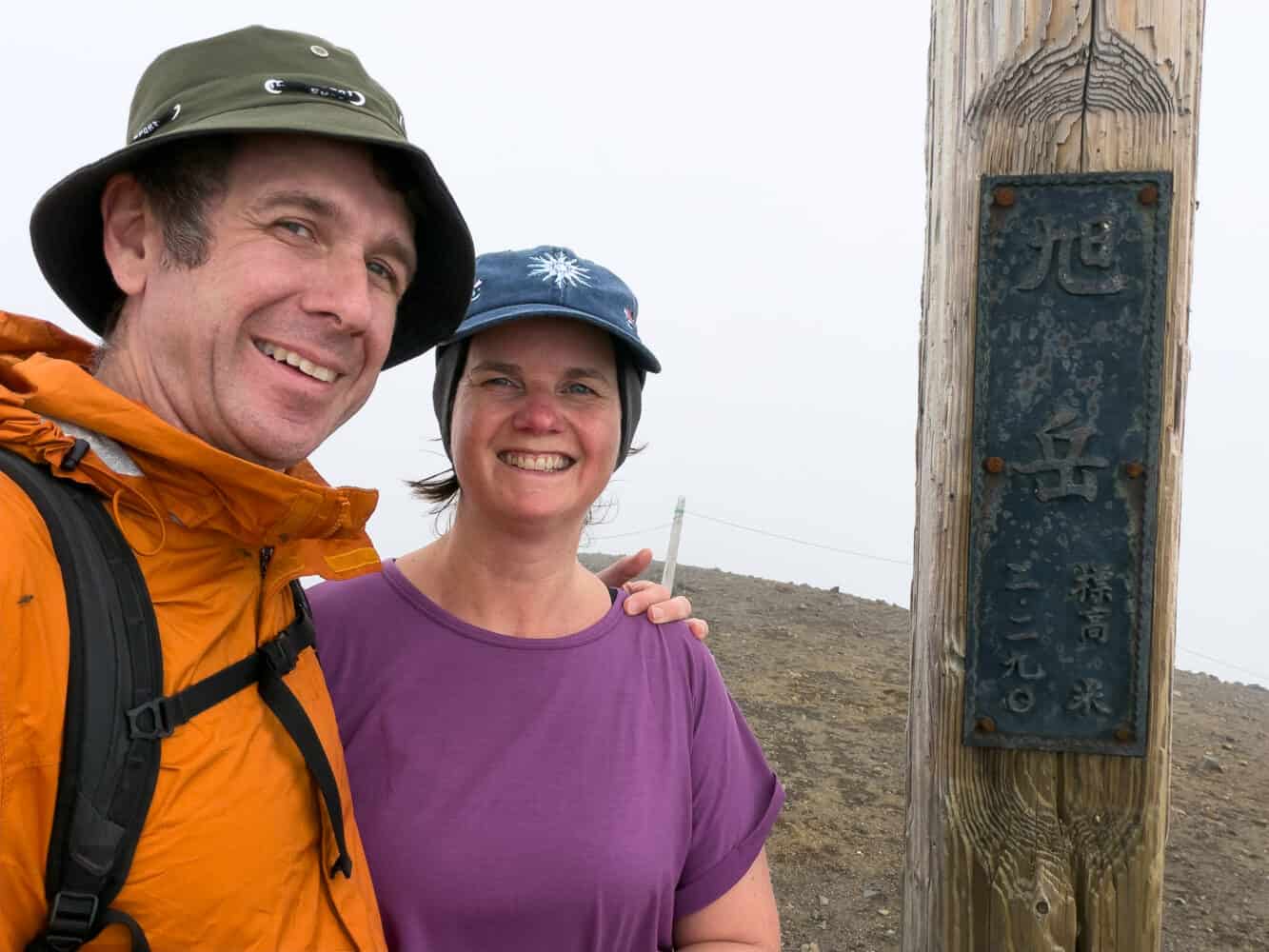
The descent was slippy, and I wished I had hiking poles (I fell once)—you can buy them in the ropeway shop.
While it was well signposted, the trail can be confusing when fog comes in. We downloaded the AllTrails Mt Asahidake route offline, and it was useful to check our progress.
Pizza Dinner
In the evening, we had a wonderful, good-value pizza at a simple one-man shop, Pizza Tei (ピッツァ亭) in Higashikawa.
We are no longer surprised at finding authentic Neapolitan pizza in small Japanese towns.
Days 4-5: Sounkyo Onsen (2 Nights)
Drive from Higashikawa to Sounkyo Onsen: 1 hour 5 minutes / 66km (41 miles).
Our next stop was on the other side of Daisetsuzan National Park.
Sounkyo Onsen is a tiny hot spring town in a forested gorge next to a raging river. It’s a beautiful spot, although somewhat marred by large ugly concrete hotels (this seems to be common in Hokkaido).
We’d planned to hike up Mt Kurodake from the top of the Kurodake Ropeway and chairlift.
Unfortunately, the ropeway was closed for renovation for most of June, so we skipped the big hike and had a more relaxing stay visiting some waterfalls and soaking in our hotel’s onsen.
We drove a little out of town to the Ginga Ryuseinotaki Parking Lot to see two waterfalls thundering down the cliffs.
You can see them from the river by the car park, but for a better view, walk about 7 minutes up the steep staircase through the forest (behind the gift shop) to the observation deck.

Even better was the Momijidaki Falls Trail. This 3km (1.9 miles) hike from the centre of town takes you through gorgeous, lush forest to an impressive waterfall.


It took us just under an hour return with 147 metres (482 ft) elevation gain. It is quite steep on the way up and slippery on the way down.
You’ll be scrambling over tree roots, so good shoes are a must, but it’s not an overly difficult trail.
Food-wise, there aren’t many options in town, and we’re glad we had half-board at our hotel.
We had a very average but edible pizza at Beer Grill Canyon for lunch, but our favourite spot was the Taisetsu Bakery Cafe in Hotel Taisetsu.
The French-style pastries were delicious, and the coffee was decent.
Where We Stayed: Choyo Resort Hotel
We have mixed feelings about Choyo Resort Hotel. There are quite a few downsides, but we enjoyed our stay and would recommend it if you manage your expectations.
This is a large, dated hotel that caters to tour groups. Not usually our vibe, but there aren’t many options in town.
Our modern twin room was worn and rather small, but we loved the view of the forested mountain and the sound of the gushing river below.

A highlight was the onsen, with several indoor and outdoor hot spring baths overlooking the forest, as well as a sauna and a cold plunge pool.
The baths do get busy, but there’s plenty of space. As most people only stay one night, we had them to ourselves on the second day from 1-3pm (check-in is a strict 3pm).
We didn’t expect much from the dinner buffet as vegetarians, but we had plenty to eat—rice, salad, fresh asparagus tempura, grill-your-own veggies, plus cakes and soft serve for dessert. If you eat meat and fish, there are tons of choices.
Overall, Choyo Resort Hotel was good value compared to other options, and it was fine for a short stay.
Day 6: Lake Kussharo in Akan Mashu National Park (5 Nights)
Drive from Sounkyo Onsen to Lake Kussharo: 3 hours / 164km (102 miles).
Our longest drive so far took us through stunning, unspoilt forested mountains before opening up into agricultural land and small towns.
Our only stop was at one of Japan’s excellent Michi-no-Eki (Roadside Stations), where you can find snacks, souvenirs, and toilets.
Bihoro-toge on the Bihoro Pass has a rest area on the second floor where we ate our packed lunch (7-11 rice balls) with a view of Lake Kussharo.
I also tried kumazasa (bamboo leaf) soft serve, which had a strong matcha-like flavour.

Walking up the hill gave us an even better view of Japan’s largest caldera lake, where we’d be spending the next five nights.

It’s part of Akan Mashu National Park, which includes three major lakes (Akan, Mashu, and Kussharo) as well as volcanoes, forests, and hot springs. It’s home to settlements of Ainu, the indigenous people of Japan.
You can find a more detailed guide to everything we did in my Akan Mashu National Park travel guide, but I’ve summarised our itinerary below.
Where We Stayed: Birch & Lake Airbnb House
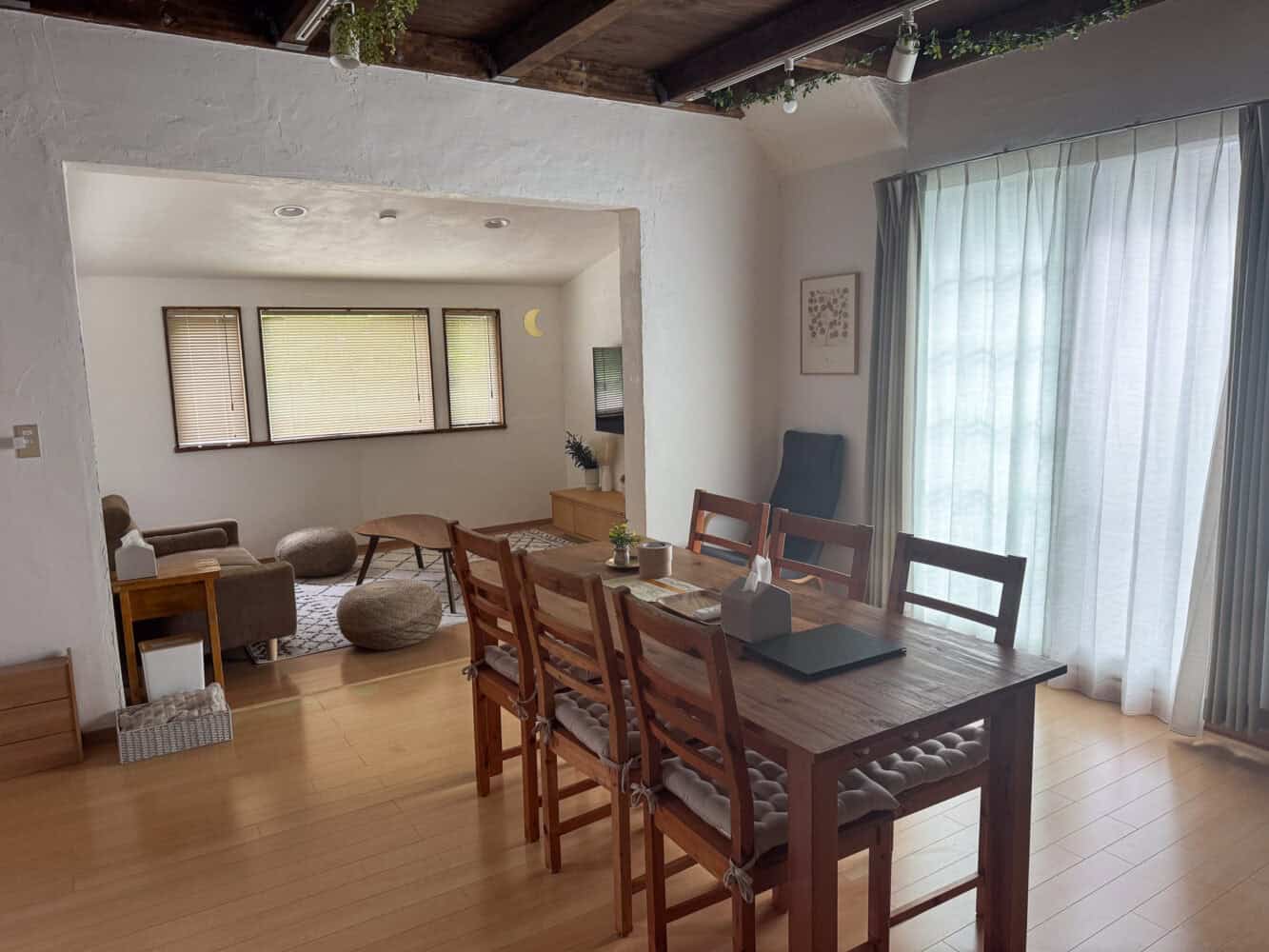
Self-catering accommodation is limited in Akan Mashu National Park, and most Airbnb options were at the southern tip of Lake Kussharo. It ended up being the ideal location, close to most of the activities we did.
We stayed at Birch and Lake, a one-bedroom, two-storey house in a small settlement of holiday homes a short walk from the lake.
While it was pretty simple, it worked well for us and even had an indoor onsen bath.
Day 7: Mt Io and Lake Kussharo
We spent the morning shopping for supplies in Teshikaga, the main town in the area, 15 minutes from our Airbnb.
In the afternoon, we did a loop drive (40 minutes total) to some of the attractions in the Lake Kussharo area. See my Akan Mashu guide for more tips.
You could combine Days 6 and 7 if you have more energy than we did. You could even add in Lake Mashu (from Day 8) if you don’t want to do the hike.
Mt Io

Mt Io is an active volcano with geothermal activity. After parking at the Mokmok visitor centre, it’s a short walk to get up close to steaming fumaroles and smelly yellow sulphur mounds.
Sunayu

At this hot spring beach on Lake Kussharo, you can dig in the sand to make your own foot bath (and the water is seriously hot!).
It’s a fun and unique experience.
Ikeno-Yu Hot Spring
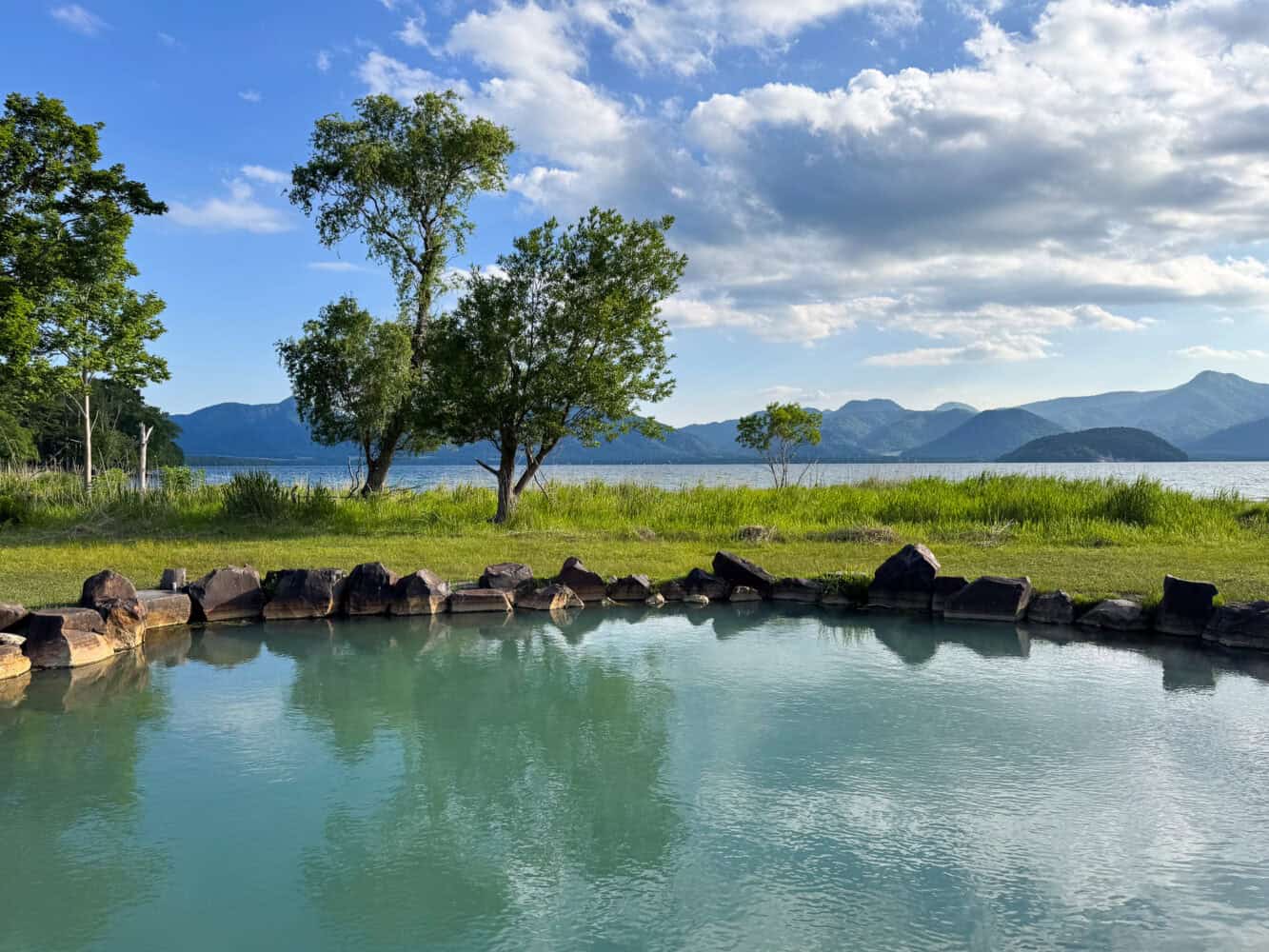
Ikeno-Yu is one of the free rotenburo (outdoor hot spring baths) on Lake Kussharo.
Swimsuits are allowed, as they are mixed-gender and not very private.
We had the onsen to ourselves for most of the time, and it was so relaxing. Simon didn’t love the algae in this natural bath, though.
There’s a nice cafe called Wakka Tomari next to the onsen.
Day 8: Mt Mashu Hike

Our Hike Stats: 4.5 hours of walking (plus 1 hour of breaks), 14.4km (9 miles), 834 metres (2736 feet) elevation gain.
The best day of our trip!
Lake Mashu is a crater lake that is famous for having some of the clearest water in Japan.
You can only admire it from above as you can’t go down to the water.
The lake is notoriously foggy, so we chose the sunniest day of our stay to visit and lucked out with glorious weather.
If you just want a quick look, Lake Mashu Observatory No. 1 has stunning views plus a cafe, shop, and toilets.
If you like hiking, I highly recommend the Mt Mashu hike, which starts at the observatory and follows the caldera rim up to the highest peak above the lake.
The views of the lake from the summit were spectacular!

While the ascent was easier than at Mt Asahidake, this hike is longer, and the return journey was what got to us. Those gentle undulations feel less gentle when you are going uphill on the way back. Absolutely worth it though!

My Hokkaido soft serve rankings: Lavender, melon, Mashu blue swirl, vanilla, kumazasa, milk.
Day 9: Wakoto Peninsula
Today was a leisurely day with a morning off, then a gentle walk and swim in the afternoon.
You could easily combine days 9 and 10 of this Hokkaido itinerary.
Wakoto Peninsula Loop Walk
The volcanic Wakoto Peninsula was only a 5-minute drive from our Airbnb.
The easy Wakoto Peninsula Loop Course took us 50 minutes through forest and past an observation deck with views of steaming fumaroles in the lake.
Wakoto Hot Spring
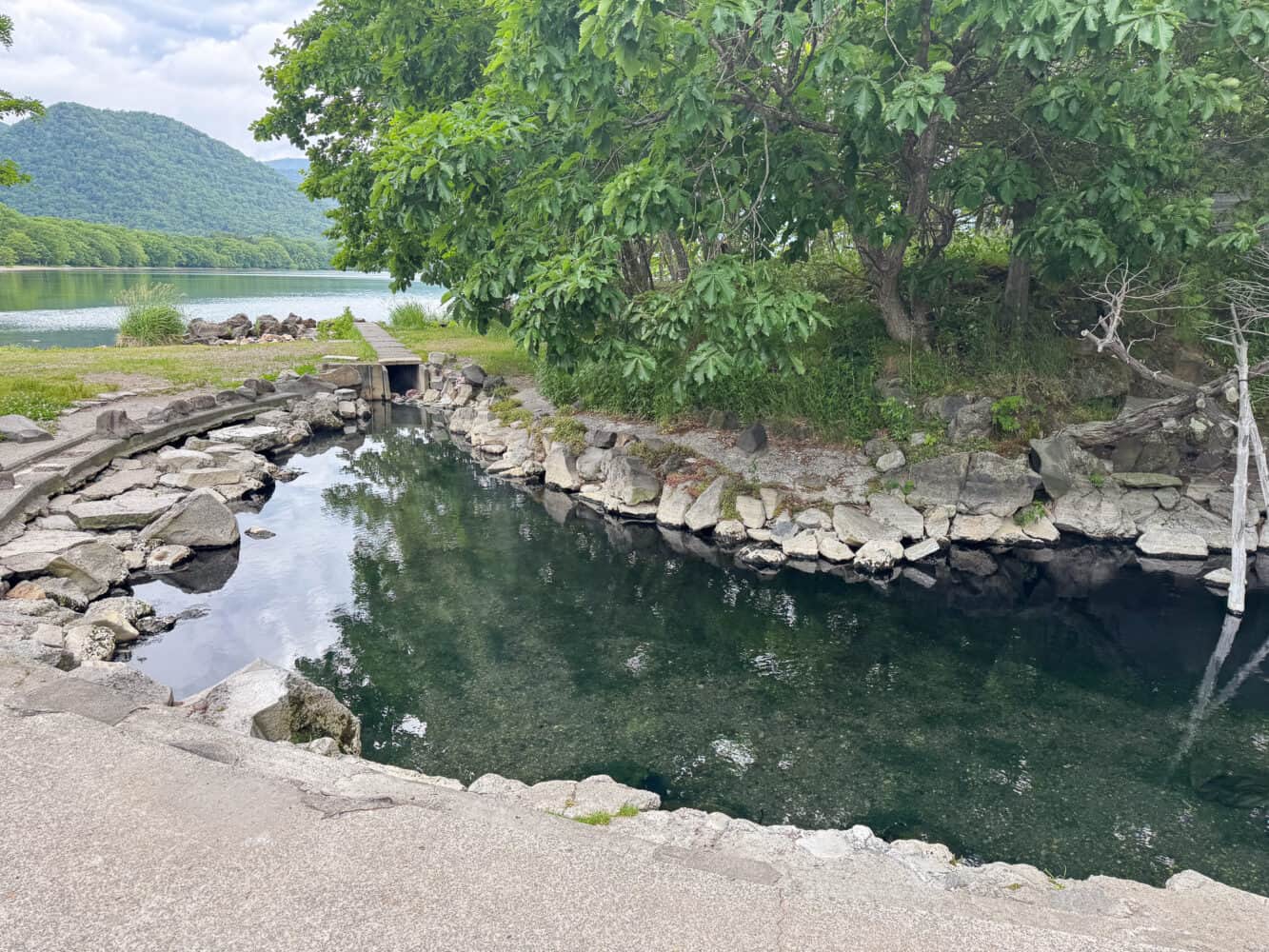
After the walk, I took a dip in the lake at the beach (16ºC/61ºF water temperature), then warmed up at Wakoto Hot Spring, another of the free mixed-gender onsen.
Again, we mostly had it to ourselves. It’s a lovely spot and better for swimming than Ikeno-yu.
Day 10: Canoeing and Sakura Falls
Despite lots of rain, this turned out to be an excellent day, with one of our favourite activities in Hokkaido.
Canoeing
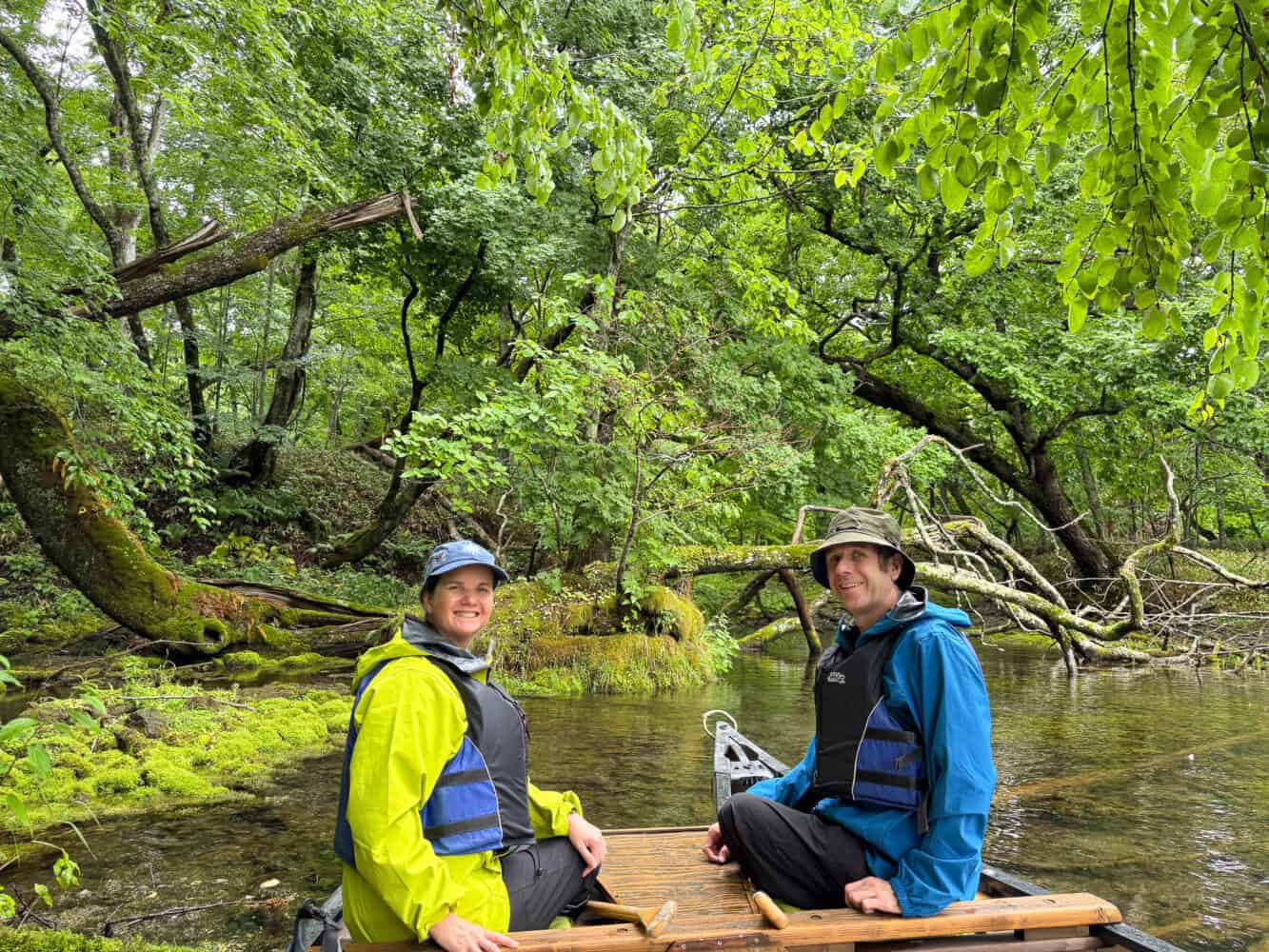
The Kushiro River flows from Lake Kussharo to the Pacific Ocean, and canoeing down its calm headwaters is one of the top activities in the area.
We did a 90-minute canoe trip with Kussharo Eco Tours, which I highly recommend.
I wish we had booked more than a few days in advance so that we could have done a longer trip (most tours with various companies were sold out).
It’s a beautiful river and a really easy trip. As we drifted downstream, the guide controlled the canoe, and we didn’t have to paddle! We just sat back and enjoyed the scenery.
Sakura Falls

Our canoe guide recommended that we visit Sakura Falls, a waterfall a 40-minute drive away (Mt Io is on the way, so you could combine them).
From June to August, you can see the unusual sight of cherry salmon trying to jump up the 3-metre gushing falls.
They are returning from the ocean to lay their eggs in the river and must navigate the waterfall.
Unfortunately, few of them actually make it. It did seem like an impossible feat, but it was impressive to watch them try their hardest.
Parking is free here, but there are only portaloos. Signs off the highway are in Japanese only, but we followed Google Maps directions successfully.
Day 11: Lake Akan and Drive to Biei
Drive from Lake Kussharo to Biei: 4.5 hours / 300km (186 miles).
We took the slightly longer route (which included a toll expressway) back to Biei so we could stop at Lake Akan on the way.
We’d originally hoped to hike nearby Mt Meakan, but the summit was closed due to volcanic activity.
We made a quick stop at Akanko Onsen, a lakeside village with large concrete hotels by the water, known for their hot springs.
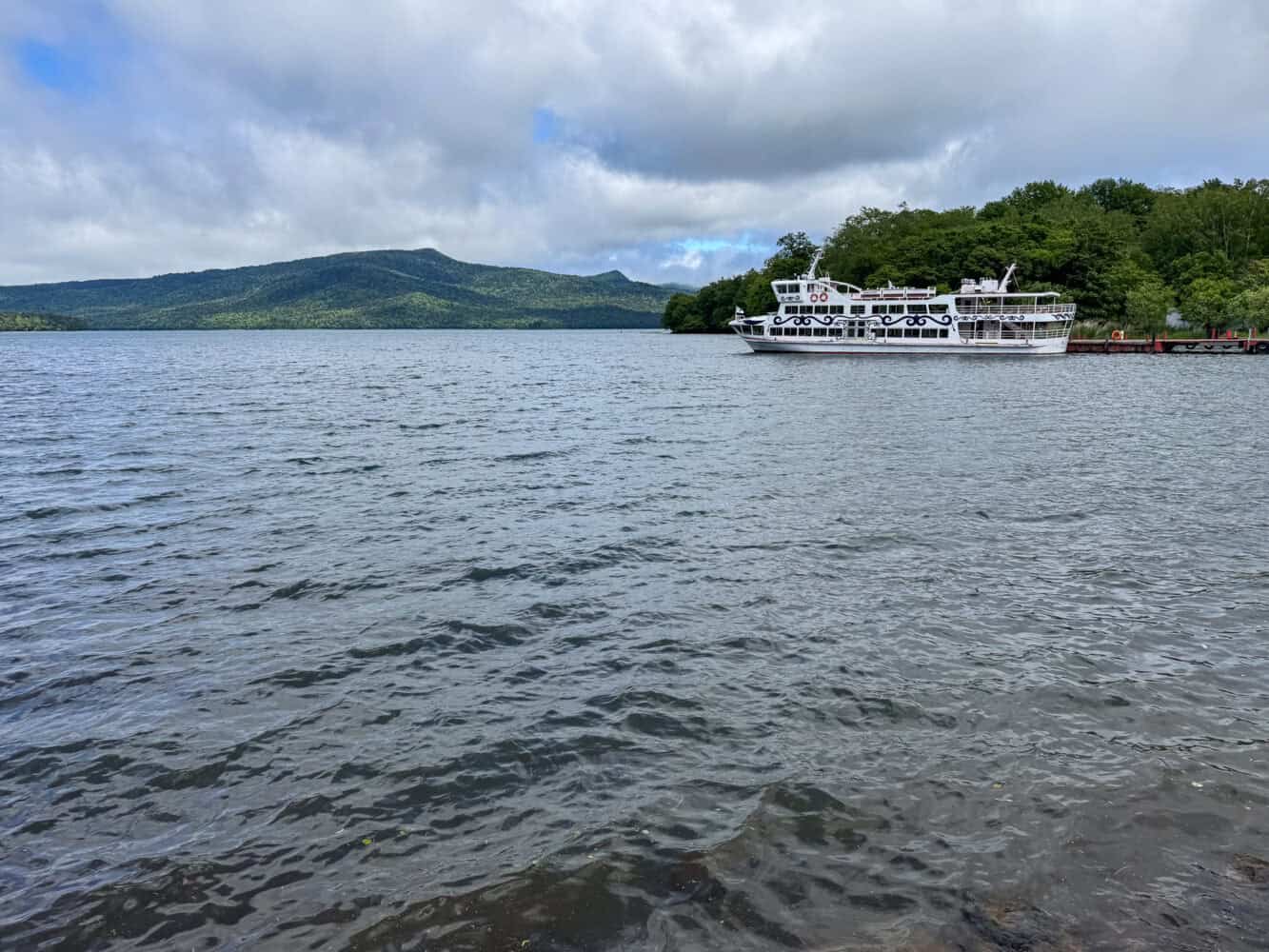
We parked at Akankohan Parking Lot, which is free and has toilets.
A 30-minute return walk on the lakeside forest path took us to the bokke, bubbling volcanic mud pools.
Our only other stop was the large Roadside Station Minami-Furano, which has all the usual facilities.
Where We Stayed: Adagio Hokkaido

We chose to stay near Biei on our last night to be near the airport for our flight the next day.
Adagio Hokkaido is an inn with wonderful views of the countryside from our room, dining room, and shared living space.

Our room was pleasant with a rare double bed.

We appreciated the thoughtful touches, such as afternoon tea on arrival (from 3-5pm) and a pour-over coffee maker and grinder in our room.
We paid extra for a 5-course European-style dinner, which was convenient (restaurants in Biei close early), and they could cater to us as vegetarians.
The next day, we flew out of Asahikawa Airport, with plans to return to beautiful Hokkaido in a different season.
More Japan Tips
We have visited Japan many times. Read our other guides to help you plan your trip.
If you enjoyed this post, pin it!

