
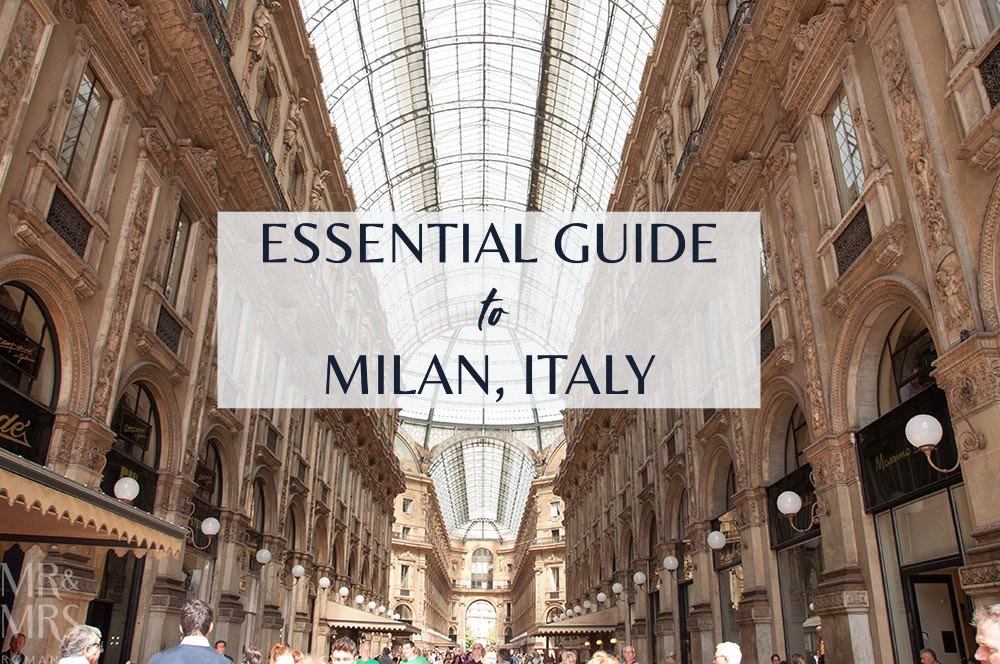
When you think of Milan, the first thing that comes to mind is probably clothes and fashion. And maybe football. But there’s so much more to this excellent northern Italian town. Here’s our Essential Guide to Milan.
Sign up to our free newsletter here for more travel inspiration. You also get your own copy of our travel ebook — it’s on us!
Our first time to Milan wasn’t what you’d call ‘normal’. It was September 2013 and Christina and I were in town for Milan Fashion Week.
The place was absolute chaos.
Piazzas were packed with fashionista and paparazzi, roads were clogged with SUVs hooning the likes of Anna Wintour from one show to the next and streets were humming with a mixture of carnival excitement and irritation.
Christina — aka Hair Romance — had been sent by Schwarzkopf to cover one of the biggest events in the international Fashion Week calendar. The things we got to do and see.
Partying in palaces, staying in grand hotels, rubbing shoulders with the glitterati (yes, that includes Anna Wintour) and even sitting front row of Fashion Week catwalk shows.
Craziness.
The times we’ve been back to Milan since then have been much more ‘normal’, but calm or crazy, spending time in Milan is a wonderful experience. We’ve put together our notes from our trips over the years to bring you our Essential Guide to Milan.

Hit each heading below to skip to that section:
Mr & Mrs Romance’s Essential Guide to Milan, Italy
How to get there
Milan one of the most connected cities in the world.
Milan Malpensa Airport is one of the busiest airports in the world. Most long-haul flights come through Rome or here.
For short-haul and budget flights, Bergamo’s Il Caravaggio International Airport offers a great value option that people regularly overlook, but a shuttle runs every half hour to central Milan — plus Bergamo is well worth looking at while you’re there. The best cappuccino I’ve ever had fyi.

If you’re already in Europe, getting the train to Milan is the perfect option. No parking or transfers, you arrive straight in the middle of the city. Milano Centrale is a major terminal with trams, buses and taxis ready to collect you when you arrive.
Where to stay in Milan
Like any major city, Milan has an enormous wealth of accommodation options. The times we’ve been here, we’ve stayed in hotels and private houses, and we’ve found the city’s northeast near Loreto to be perfect for our needs.
Loreto is superbly connected — close to Centrale but also a lot of other metro stops — and is also near plenty of bars and restaurants. It’s also at the end of the Corso Buenos Aires, one of Europe’s longest shopping streets.

For example, the hotel we stayed at here was the Unahotels Galles Hotel — you can read our full review here.
For whatever reason, accommodation in Loreto is also usually quite reasonable.
Where to eat and drink
Italians really can’t help themselves — they just can’t serve bad food. And the trick to it is you don’t have to go to the swankiest restaurant for the best meal; little local places will often out-punch their bigger, flashier (and more expensive) international competitors.
Here are some of the places we like:
Pirati Poeti
Initially because it was close to our accommodation, but later because we loved it so much, Pirati Poeti (Pirates and Poets) became our favourite bar in Milan.
Not much more than a hole in the wall with a little covered section on the street for tables, this bar pushed out some great cocktails. But it was more about how friendly the staff were, how quickly we became locals (we were best mates with the owners by the end of the second round) and that sought-after feeling of being part of it all.
We watched a local football derby on the TV they’d angled over the street, we share tables with the locals and joined in the jokes through the evening. A great spot.

Luca & Andrea Bar
There are plenty of bars and cafes along the canals in Milan’s southwest, but we picked Luca e Andrea’s for its friendly, simple and authentic vibe.
The dishes they serve are pretty straight forward, but generous and tasty. My cotoletta alla milanese (Milan-style schnitzel) was a bit dry, but big enough to keep me happy. Apart from a table of locals, who we were friends with by the end of the meal, we were the only customers on that winter’s evening.
During summer, I’m sure the place is packed.
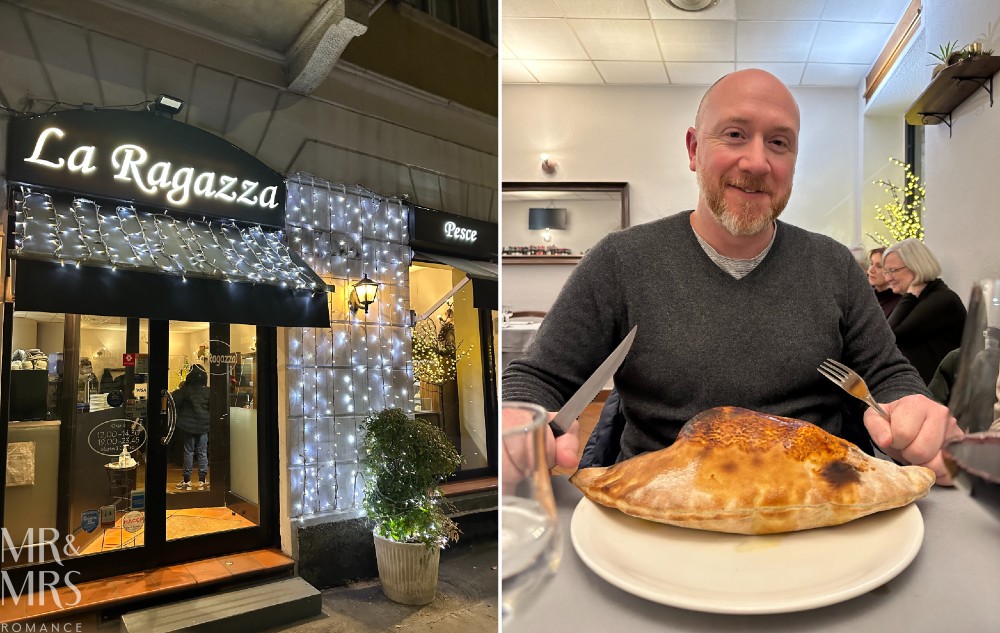
Ristorante Pizzeria la Ragazza
About as old school Italian as you can get, La Ragazza is full of the charm that Italian restaurants overseas always try to emulate, but never get quite right.
Staffed solely by older Italian men with a bit of swagger and banter, La Ragazza is the quintessential Italian dining experience — none of this being ignored, belittled or overcharged routine you get in over-touristy places.
The restaurant’s food is all on point. Enormous calzone to enormous steak Florentine, delicate entrees and tasty home-cooked desserts, and a beer, wine and spirits shelf to match, this is the real deal.
All’ Antico Vinaio sandwich shop
There are a few of these sandwich bars scattered around the city, but the one on the outside wall of Milano Centrale Station is the OG.
These guys smash out hundreds of massive sandwiches every day. Made from fresh focaccia baked out back and brought into the shop as they’re ready, these sandwiches are so full of all the Italian deli goodies you can think of and they’re amazing.
Rivoire Oberdan

This up-market restaurant is one of those rare places that takes itself seriously enough that it has a sense of humour about it. Eclectic, eccentric and at times just plain weird, Rivoire Oberdan on Piazza Oberdan is decorated with the strangest collections of things.
Samurai armour, French vases and Roman busts fill shelves, rose pink marble shines from the floor, and the walls and ceiling are the canvas of Sistine Chapel style classical paintings. But it’s the stuffed animals that catch the eye. Lions — even a full-size ostrich on its own little desert diorama — stand sentinel around the room.
Food here is excellent. Well-plated dishes are delivered by staff dressed as 1950s cruise liner crew, and the steak tartare is constructed at the table on a little trolley. Pretty cool.
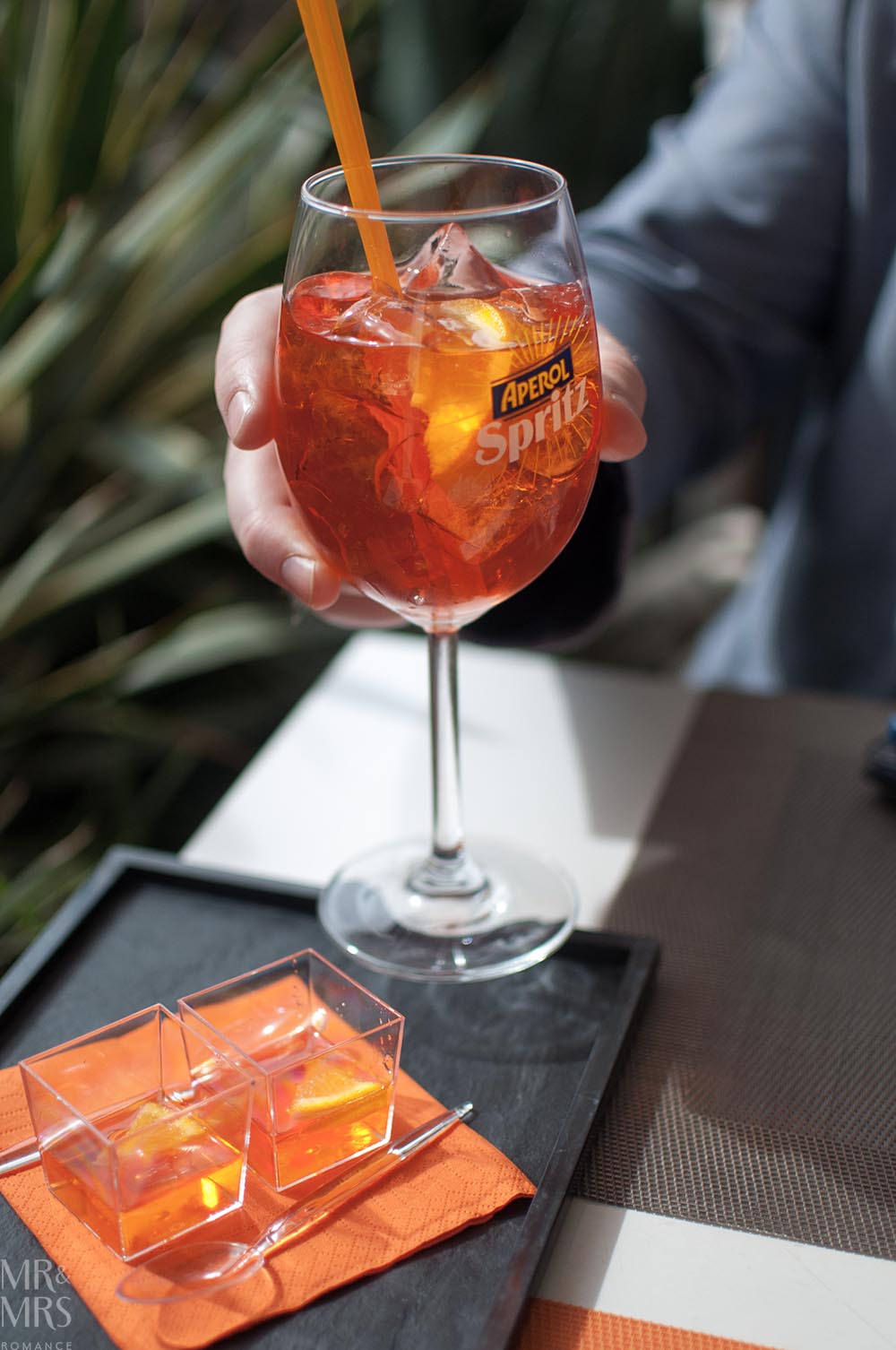
Terrazza Aperol
Overlooking the Duomo and easy to spot from the street with its bright orange umbrellas, this balcony bar is pricy and packed, but gives great views over the piazza.
This place had only recently opened when we were there in 2013, so ignore the prices in our write-up, but here’s our story on Terrazzo Aperol.
Il Bar
For even better views of the Duomo, Il Bar is a glorious open-air rooftop venue at the top of the Rinascente department store (level 7).
Don’t take too much notice of the queues to get in (or should I say out) to the bar; most people are waiting to go and take photos then shove off. Ask for a table and you’ll usually be whisked past. Very VIP, darling!
Things to do in Milan
Duomo and rooftop
Europe’s biggest Gothic cathedral, the Metropolitan Cathedral-Basilica of the Nativity of Saint Mary — or just the Duomo to its friends, this 14th Century church is one of Italy’s most striking landmarks.
Go inside to see the statues, ceilings, pillars and saints — and also the zodiac signs in the beautiful floor, and down into the catacombs to see more saintly remains.
But it’s the rooftop that offers the most unique and interesting experiences in Milan.

You need to pay an entrance fee to go into the Duomo, but for a few extra euros, you have access to the roof. And for a couple more euros, you get to skip the narrow clambering staircases and take the elevator to the top. Much more civilised.
From the roof, you get superb views out over the city, but you also get close-ups of the spires and statues that adorn the Duomo — perspectives that you just can’t get any other way.
The intricate details of the roof really are something not to be missed.
Galleria Vittorio Emanuele II mall
Directly north of the Duomo, the Galleria shopping mall is a beautiful glass-topped building that has inspired many glass-roofed malls around the world including the Block Arcade in Melbourne.
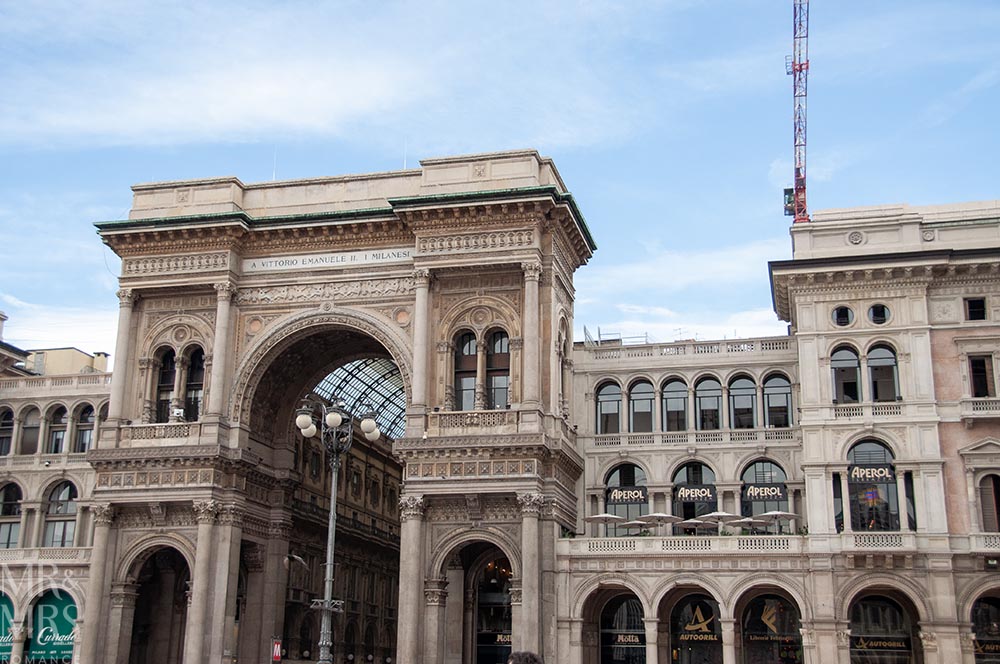
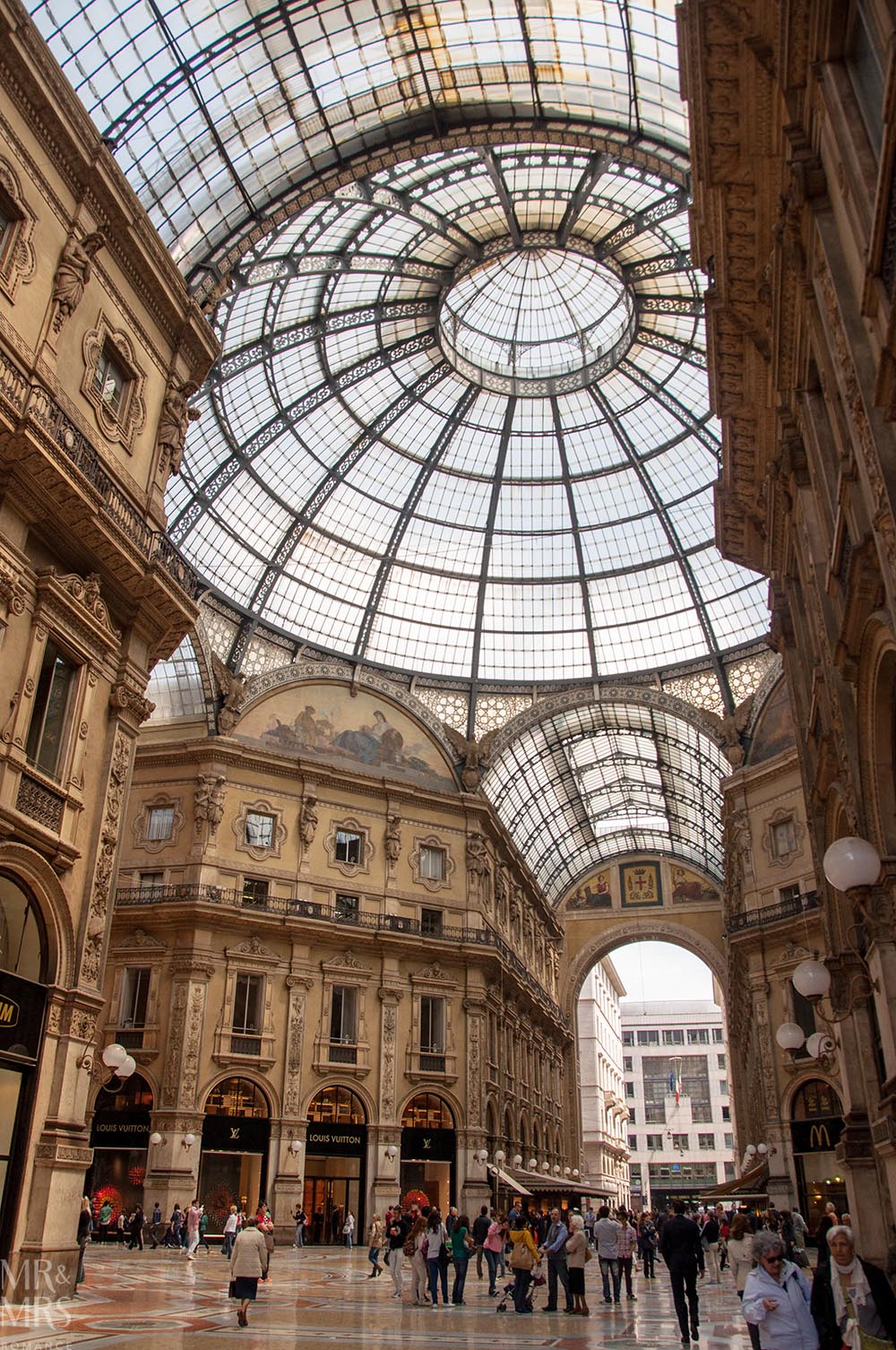
Housing some of the most prestigious fashion icons (and at one point a McDonald’s!), this mall with its glass-domed atrium is almost as popular as the Duomo itself. At Christmas time, Milan erects an enormous tree in the middle.
Of course, you can come here to shop, but most people are here to admire the building itself.
Church of Santa Maria delle Grazie and the Last Supper
Within the bright Renaissance-era walls of the Basilica di Santa Maria delle Grazie hides one of the most famous paintings in the world. Leonardo da Vinci’s The Last Supper draws millions of visitors each year.
We’ve never been in to see this masterpiece as the ticketing system is not only complicated, requires planning and has non-negotiable arrival times that we find difficult and off-putting, it’s also very expensive.
But this link will get you one of the best skip-the-queue tours out there if you’re planning to see one of the most significant artworks in the world.
Parco Sempione, the Arco de Pace and Castello Sforzesco
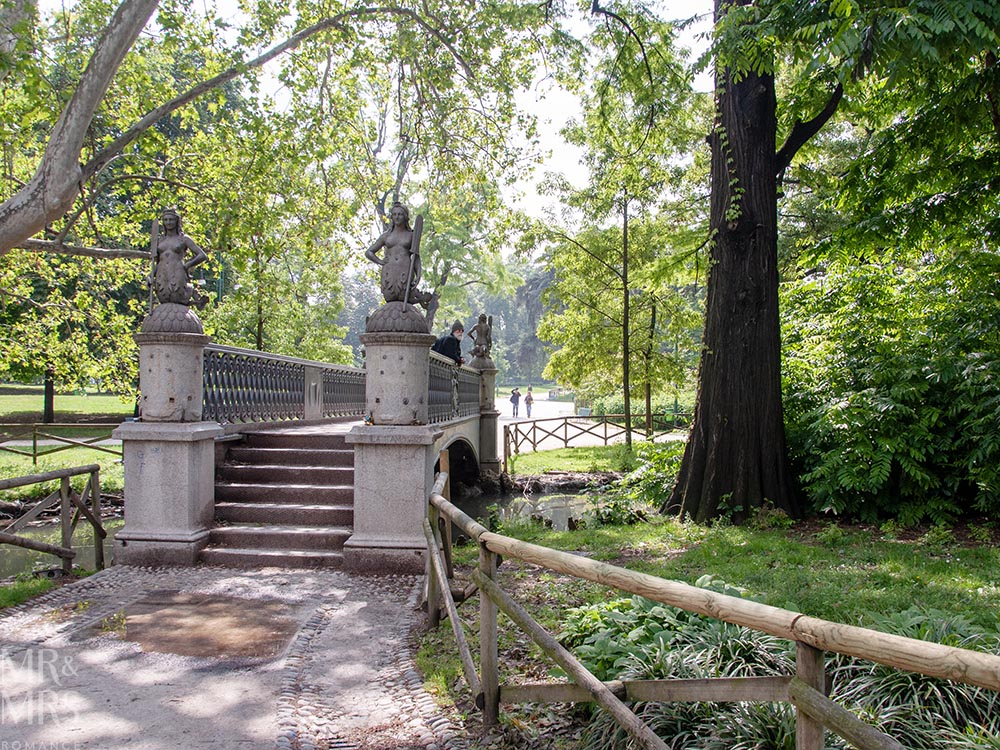
Easily the biggest park in Milan, Marco Sempione is at the heart of the Centro Storico — Milan’s old town. At one end is the magnificent Arco de Pace — Milan’s triumphal arch — and at the other the stout Castello Sforzesco, a 15th Century fortress now turned museum and art gallery.
It’s free to explore the grounds of the castle, but around €5 to go inside. Artworks here include a Michelangelo and some di Vinci frescos.
The Arc de Pace frames the park and castle beautifully, and is a popular meeting place (i.e. people-watching spot).

Cimitero Monumentale
It might seem a little morbid — close to ‘dark tourism’ perhaps — but Cimitero Monumentale (the Monumental Cemetery of Milan) is amazing. Full of ever grander and more opulent mausoleums, this cemetery gives you some idea of the wealth within Milan.
You won’t find the graves of anyone particularly famous here — this isn’t Highgate or Père-Lachaise. But only the super-rich are laid to rest here. Many of the Campari family for example. But you don’t come here hunt the stars; it’s more to marvel at the sheer scale of some of these tombs.
Quadrilatero della Moda
Quadrilatero della Moda or Quad d’Oro is the high-end shopping district of the city. If you’re looking for the haute couture that Milan is famous for, you’ll find it here. The finest, most famous fashion houses have premises in the Quad d’Oro.
So get ready to either grip your wallet a bit tighter or let it fly like a bird released. There’s no middle ground!

Corso Buenos Aires
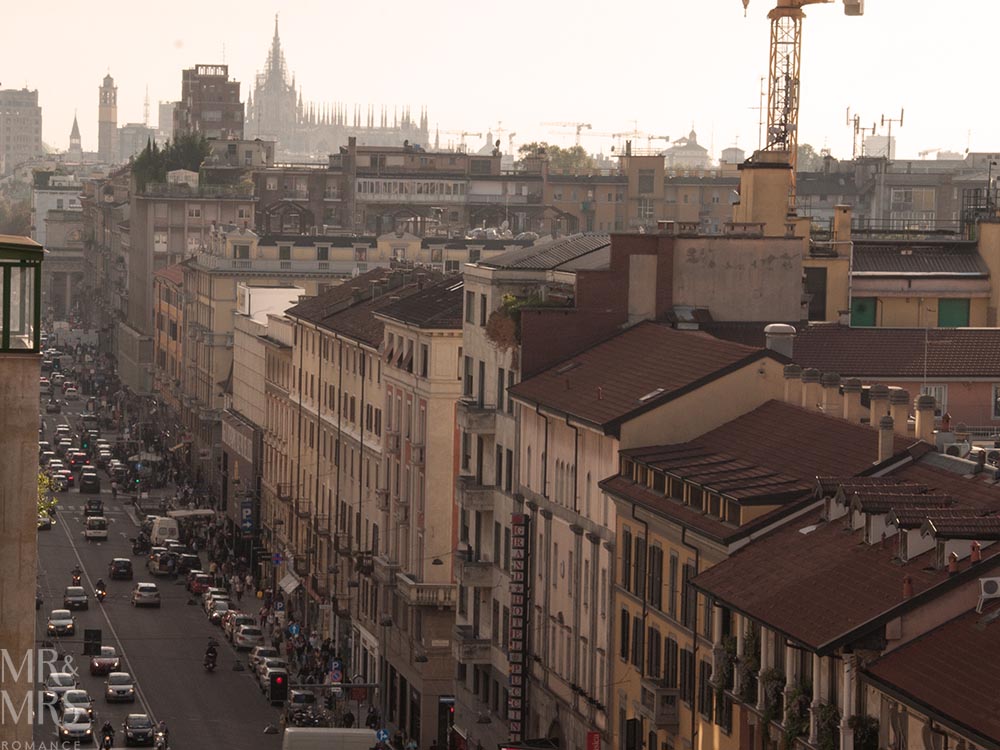
Europe’s longest shopping street, Corso Buenos Aires is full of the modern, regular ‘high street’ retail.
It’s also full of great bars and restaurants, so it’s worth exploring this 1.2km stretch and its side streets. There’s an abundance of cool, fun places to stop in at, and they tend to be more affordable than anything you find near the Duomo.
Aperitivo hour
This fascinating custom seems to have become a bit of a Covid casualty, but there are still some venues that do aperitivo hour.
For the cost of a drink, you can help yourself to the tasty morsels at the counter and you can usually go up as many times as you like. This is as well as the snacks that come with drinks at most bars. Expect pizzi, cheese, meat, fruit, olives, salads frittatas, crudités and more.
Sport in Milan
Its central location has made Milan not only centre of fashion, but also a financial and industrial one too. And let’s not forget all the tourism from sport.

With not one but two internationally renowned football teams of AC and Inter Milan in the city, as well as Bergamo’s Atalanta BC to the north, Milan’s famed San Ciro Stadium gets a good workout.
Then of course you have the Formula 1 in nearby Monza, and with the 2026 Winter Olympics also held here and across the region, sport is central to Milan’s personality.
Milan in winter
We love to travel to places — especially European cities — out of season. The crowds are smaller, the locals are calmer and you get to see the destination for what it really is. It’s like meeting a famous person when their guard’s down.
Milan in the winter can be quite cold, but not unbearable. On average, only December and January get really cold, and temperatures generally don’t dip below zero.
Pretty much everywhere is still open in the winter months in Milan, and though there are far fewer visitors, there’s still a great vibe to the city.
Check out our full write-up on Milan in winter here.
Beyond Milan
Lake Como
Lake Como is one of those special places in the world that everyone should see at least once. It’s so beautiful.
From Milan, it’s a straightforward train journey takes you from Milano Centrale to Varenna — a little town on the eastern shores of the lake — in under an hour.
Varenna is stunning and well worth exploring. Its steep streets that reach up from the lake are full of pretty shops and bars.
From here you can get a ferry across the Bellagio. Apart from being where George Clooney lives, this is the jewel in Como’s crown. From the Venetian style main street and ferry wharf with its grand hotels and over-water restaurants to the hillside hideaway bars and boutiques, Bellagio is lovely.


Down at the northern point of the town is Ristorante Punta (only open seasonally) where you can sit and enjoy the views up the lake to the mountains beyond.
On the western side of Lake Como, the ferry stops at equally beautiful town of Menaggio. Not far from here is the hotel that has our hearts. The lady of the lake, the Grand Hotel Tremezzo sits elegantly, with its private pool floating in the lake like a lily pad.
Check out our story on the Grand Hotel Tremezzo here.
Bergamo
Bergamo is a lovely little town north of Milan. Its old town — Citta Alta — sits at the top of a hill. You can drive or even walk up to it, but the funicular train is much more enjoyable.
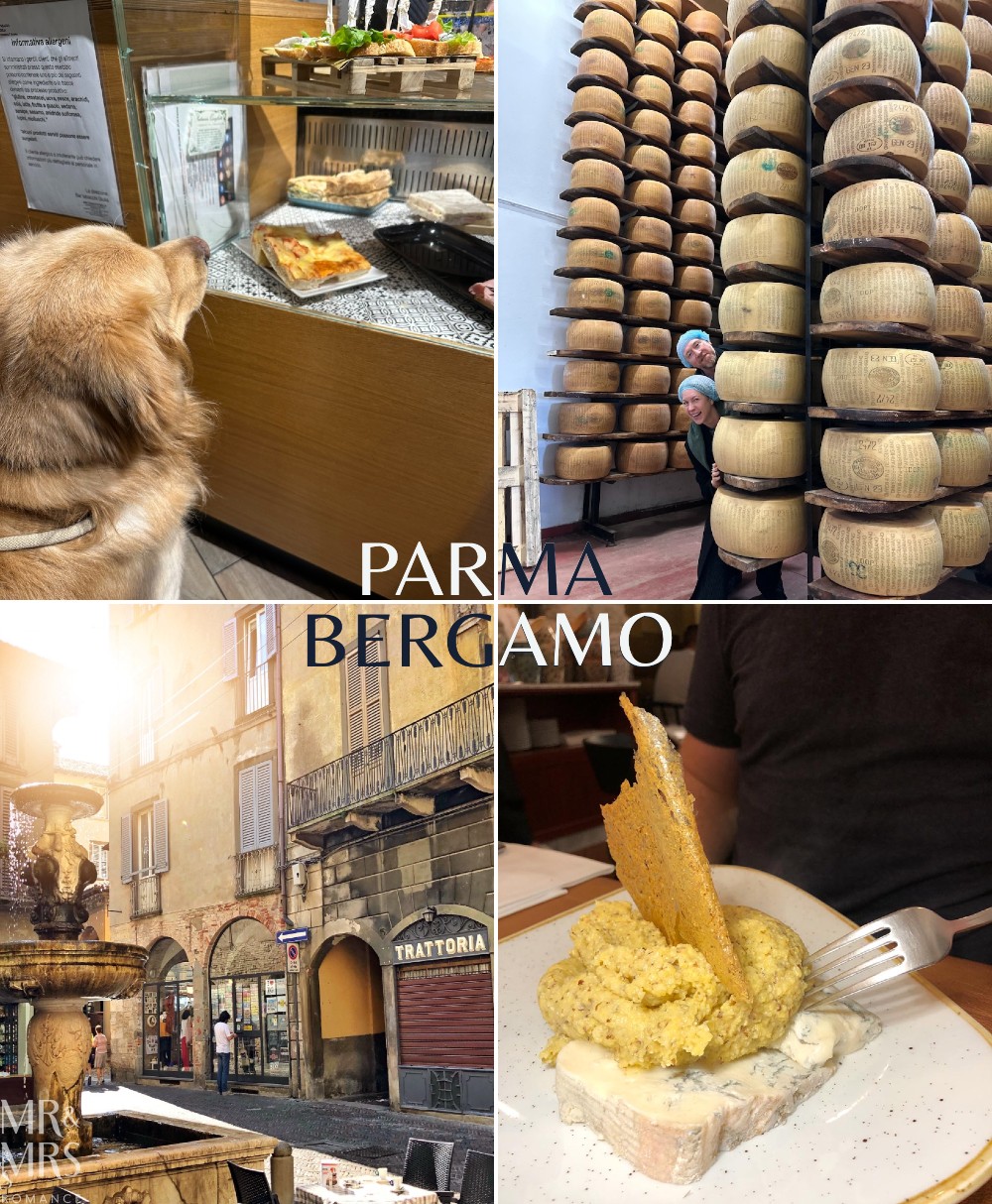
Read our write-up about Bergamo here, where the local dish is polenta and gorgonzola, and where I discovered the best cappuccino I’ve ever had.
Parma
East of Milan is the gastronomical wonderland of Parma. Everyone here is obsessed with food, and for good reason. This is the heartland of goodies such as prosciutto di Parma and Parmigiano-Reggiano.
This is the parmesan cheese and prosciutto ham tour we did while we were in Parma. Highly recommended. Our full review is here.
The Lakes (Como, Iseo, Lugano)
North of Milan are the Grandi Laghi Prealpini – the Great Pre-Alpine Lakes.
Lake Iseo is small and quiet, its main town is no more than a couple of streets, some shops and bars, and one hotel.
The island in the middle — Monte Isola — is Europe’s largest island on a lake, but that doesn’t mean much. It’s still tiny. But around its edges are some lovely little spots for a spritz or a snack.
Here’s our story on Lake Iseo.


Lake Lugano is interesting because it’s split in two by the Swiss border. Here you can eat Italian food while paying in Swiss Francs — a novel if expensive process. It’s so interesting though, to feel the difference between the Italian side and the Swiss side. You wouldn’t think it makes any difference, but it really does.
Here’s our story on five things to do at Lake Lugano and some of our favourite photos.
Apart from Lake Como and its train ride from Milan, which we’ve mentioned already, you’ll need a car to get to the other four: Lake Iseo and Lake Lugano, and Lake Maggiore and Lake Orta.
